
There is no single gut health food
Lists of gut health foods tend to name the same things: yogurt, kefir, sauerkraut, oats, beans, onions, berries. Each one is there for a reason, but none of them works as a shortcut on its own. What research keeps coming back to is the pattern of a whole week, not one ingredient.
So the more useful questions are how much fiber you eat and how many different plants it comes from.
Fiber: the part most people are short of
Fiber is the part of plant foods we cannot digest ourselves, and much of it is broken down by gut bacteria instead. UK guidelines recommend 30 grams of fiber a day for adults, and the NHS notes that most adults eat about 20 grams.
Fiber is not one thing. Oats and barley bring beta-glucan, onions, leeks and garlic bring inulin, and beans and lentils bring resistant starch along with other fibers. Different plants carry different mixes, which is one reason variety comes up so often.
Fermented foods: interesting, not a replacement
Fermented foods such as yogurt, kefir, kimchi and sauerkraut contain live microbes, and research on them is active. In a 2021 Stanford study, 36 healthy adults spent several weeks on either a diet high in fermented foods or one high in fiber. The fermented-food group's gut microbiome became more diverse over that time, while the high-fiber group's diversity changed little in the same period.
It was a small and short study, so it says more about what is worth researching than about what any one person should eat. Fermented foods can sit alongside a varied plant diet, not replace it.
Variety without a list of superfoods
The plants that come up most here are ordinary and cheap: oats, beans, lentils, onions, leeks, garlic, cabbage, carrots, apples, berries, nuts and seeds. You don't need a specialist shop to eat 20 or 30 different ones in a week.
Small swaps add up: mixed beans instead of one kind, a seed mix on breakfast, two herbs instead of one, a different grain each week.
- Fiber-rich plants at most meals
- Different plants across the week, not the same few
- Fermented foods if you enjoy them
- Ordinary foods rather than expensive superfoods
Fibermaxxing: grams or variety?
Fibermaxxing is a trend that took off on TikTok in 2025: people set out to eat as much fiber as they can, often aiming at or above the daily guideline. 30 plants a week counts something else: how many different plants you eat in a week, not grams.
The two overlap, because most foods that count toward 30 plants also bring fiber. But you can reach a big fiber number with very little variety. Porridge with chia every morning plus a fiber supplement adds up to plenty of grams, and two plants for the whole week. It works the other way too: a pinch each of six different seeds is six plants and hardly any fiber.
To do both, keep the high-fiber foods but rotate them: lentils on Monday, chickpeas on Wednesday, black beans on Friday. Dietitians commenting on the trend warn against too much at once: build up slowly and drink enough, because a sudden jump in fiber often brings gas and bloating. If you've been told to eat a low-fiber diet, check with your doctor first.
How Eating30 counts it
Eating30 counts the part of this you can see on your plate: how many different plants you eat in a week. Each plant counts once per week, however often you eat it. Sauerkraut goes in as cabbage, and a tin of mixed beans is as many plants as there are beans in it. Yogurt and kefir aren't plants, so they don't add to the count.
Herbs, spices, garlic, tea and coffee can go in as a quarter, since you eat small amounts of them, and four quarters make one plant. The app doesn't measure fiber, doesn't rate foods as good or bad, and makes no health promises.
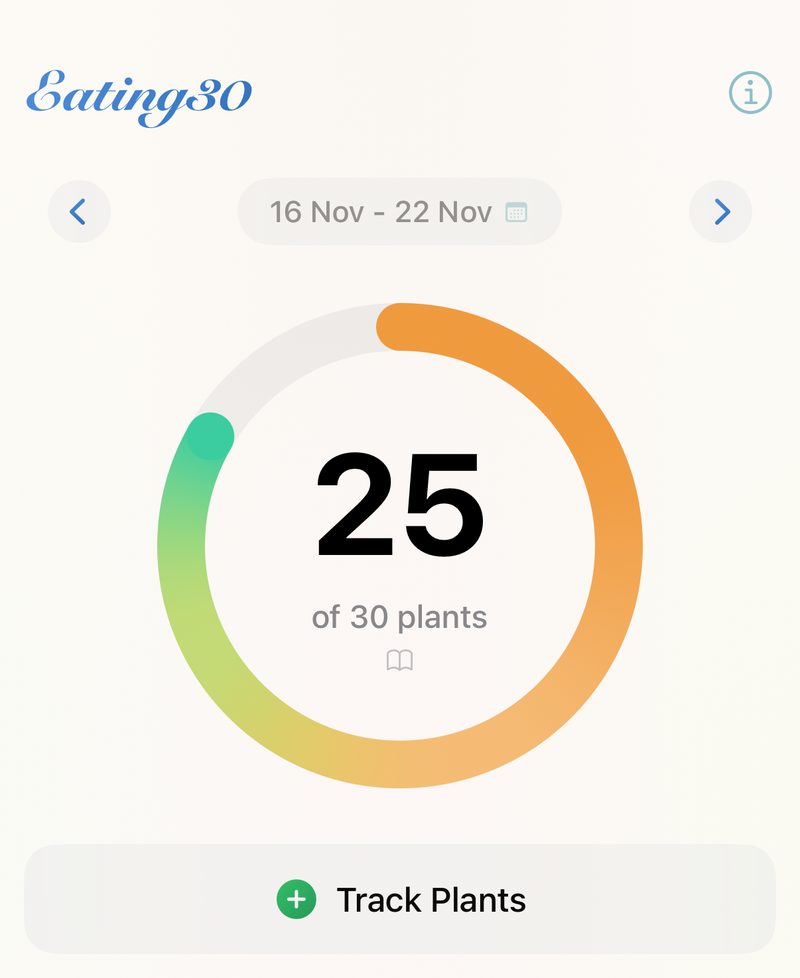
- Eating30 counts different plants, not grams or portions.