
Build variety across the whole day
Reaching 30 plants is usually easier when you stop treating it as a dinner-only problem. Breakfast oats, berries, chia seeds, and nuts already create variety. Lunch can add beans, grains, greens, and herbs. Dinner fills in the rest.
Use plant staples that keep well
Freezer, cupboard, and fridge basics make variety much easier. Frozen berries, spinach, peas, canned beans, oats, brown rice, lentils, nuts, seeds, and a few fresh herbs can cover a lot of ground.
Variety often fails when food goes bad or the fridge is empty. Shelf-stable and frozen options help you stay consistent without overspending.
- Keep at least two legumes at home
- Rotate grains instead of buying only one
- Use seed and nut toppings to add quick variety
- Buy herbs and spices you will actually use
Make toppings do more work
One of the fastest ways to raise your weekly count is to use toppings intentionally. A bowl of soup can become more diverse with parsley, pumpkin seeds, a spoon of beans, or chopped spring onions.
The same is true for yogurt bowls, salads, grain bowls, toast, pasta, and roasted vegetables. Small additions add up.
Choose easier wins instead of chasing perfection
You do not need a brand-new recipe every night. Repeating a few favorite meals while swapping one or two plant ingredients each time is often more sustainable than constantly cooking from scratch.
For example, a grain bowl can rotate between chickpeas, black beans, edamame, beetroot, carrots, cabbage, kale, seeds, and herbs while still feeling like the same reliable meal format.
Track to spot patterns
Most people underestimate how repetitive their weeks become. Tracking reveals that quickly. You may notice that you eat fruit regularly but forget legumes, or that you rely on the same vegetables every week.
Once the pattern is visible, improving it is much easier.
Three ways to keep count
You need some way to keep count, because by Thursday nobody remembers whether they had leeks on Monday.
Paper on the fridge is free and visible, and the whole household can see it. It has no history, duplicates slip in, and it does not come to work with you.
A note on your phone is always with you and quick to add to. You end up scrolling to check whether something is already on the list, and the counting is manual, including any quarter points for herbs.
A dedicated app does the counting for you. Eating30 is the one we build, so take this with a pinch of salt: you pick plants from a list of more than 350, it ignores duplicates, it starts again when your week does and it keeps your history. Whichever you pick, the method matters less than doing it for a few weeks in a row.
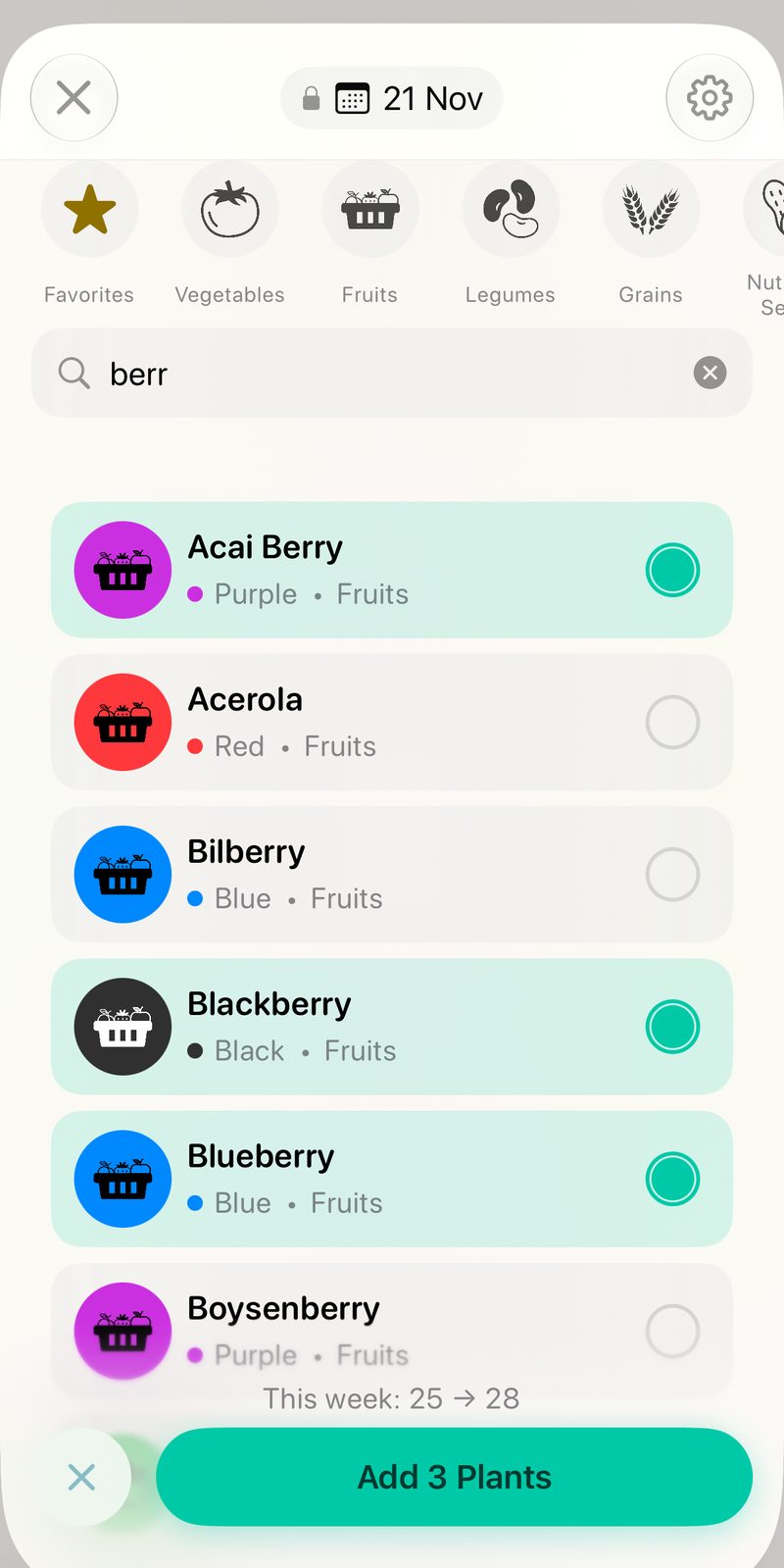
- Search for a plant, or tap a group at the top.
- Tap everything that was in your meal.
- Add them all in one go.
A first week, step by step
The first week goes better if you do not try to win it. For days 1 to 3, eat as normal and log everything plant-based, including the garlic in the sauce and the pepper on your eggs. Do not change anything. You want an honest picture.
On day 4, look at the gaps. Which food groups are thin, and which colors have not shown up?
For days 5 to 7, add three easy things, not ten: a bag of mixed seeds sprinkled on breakfast (three or four plants straight away), a tin of mixed beans thrown into whatever you are cooking, and one fresh herb you do not usually buy, such as dill, mint or coriander.
Do not buy a basket of things you do not know how to cook. They will sit in the fridge and you will feel bad about it. The habit is easier when the new plants are small additions to meals you already like. At the end of the week you will have a number, and next week's target is that number plus a few.
An example week that reaches 30
Here is what an ordinary week can look like. A plant already eaten earlier in the week is not counted again, and herbs, spices and garlic count as a quarter, the plant points way. The number after each day is the running total.
- Monday: porridge with oats, banana and walnuts; lentil soup with carrot, onion, celery and a pinch of cumin. 7¼.
- Tuesday: wholemeal toast with avocado; a stir-fry of broccoli and red pepper with ginger and garlic, on brown rice. 12¾.
- Wednesday: yogurt with frozen mixed berries (blueberries, raspberries, blackberries) and pumpkin seeds; a chickpea salad with spinach and tomato. 19¾.
- Thursday: an apple; wholemeal pasta with tinned tomatoes, a tin of mixed beans (kidney, borlotti and black-eyed beans) and fresh basil. The pasta and tomatoes were already counted. 24.
- Friday: rye bread with hummus (the chickpeas are not new, the sesame and lemon are); a cauliflower and pea curry with turmeric and coriander. 29½.
- Saturday: an orange. 30½.
- Sunday: anything new is extra.
Breakfasts that do half the work
Breakfast is the meal people repeat most, which makes it the best place to build in plants once and then forget about it. Pick one of these as your default, and the first five or six plants of every week are handled before Monday's coffee.
- Loaded porridge (6): oats, banana, blueberries, walnuts, chia seeds, cinnamon
- Muesli with extras (8 or more): oats plus another grain or two, a few nuts, some seeds and dried fruit, with fresh berries on top
- Seeded toast and avocado (5 or 6): a rye or multigrain seeded loaf, avocado, lemon, chili flakes
- Shakshuka (7): tomatoes, red pepper, onion, garlic, cumin, paprika, parsley. Eggs do not count, but they do not need to
- Overnight oats (5): oats, grated apple, flaxseed, cinnamon, almonds
A starter shopping list
This list is for one shop that can get you to 30 over a week, combined with whatever is already in your cupboard. Depending on how you count the mixed bags, it is comfortably over 30 different plants. When you get home, it is tempting to log everything you bought. Log as you go instead: the count is for what you eat, not what is in the cupboard.
- Fresh: onions, garlic, carrots, red peppers, spinach or kale, mushrooms, bananas, apples, lemons, a bunch of parsley or coriander, fresh ginger
- Tins and jars: mixed beans, chickpeas, chopped tomatoes, dried red lentils
- Frozen: peas, mixed berries, edamame
- Bakery and cereals: a seeded rye or multigrain loaf, oats
- Nuts, seeds and dried fruit: a mixed seed bag, walnuts, raisins or dried apricots
- Spices, if you do not have them: cumin, smoked paprika, cinnamon
In autumn: squash, roots and nuts
Autumn is one of the best times of year for variety, because so many things are in season at once and they are cheap. The shops have several kinds of squash, and Eating30 lists each one separately: butternut, acorn, delicata, kabocha, spaghetti squash and pumpkin.
Around them are apples, pears, plums, blackberries, figs, quince and cranberries, then beetroot, parsnip, celeriac, swede and turnip, then kale, cavolo nero and Brussels sprouts, and chestnuts, hazelnuts and walnuts. Chanterelles, porcini and other mushrooms show up more in shops at this time of year.
Porridge with stewed apple and blackberries, squash soup with sage, a tray bake of beetroot, parsnip and red onion, roasted chestnuts and a pear and walnut salad make ten plants that were not in your summer week. Purple and red often drop off as summer berries go, and beetroot, red cabbage and plums are the easy way to bring them back.
If it feels hard, or you stall
30 plants a week sounds harder than it is, and it is also a bit harder than cheerful social media posts suggest. It sounds hard because people picture 30 different vegetables. Nobody eats 30 different vegetables in a week. The count fills up from everywhere else: a seeded loaf, a spice-heavy dinner, a tin of mixed beans, a handful of nuts.
What makes it a bit hard is habit. Most of us buy the same things every week because it is easy and we know what to do with them, so one or two things in the basket have to change.
You do not have to hit 30 in week one either. Go from your normal count to normal plus five, then do it again. A week at 24 is still a week with more variety than before.
If you stall, look at what is missing, not at what is there. It is usually one of these, and the last one is the most common and the easiest to fix:
- No grains other than wheat
- No seeds at all
- Only one kind of bean, or none
- Herbs and spices used in cooking but never logged